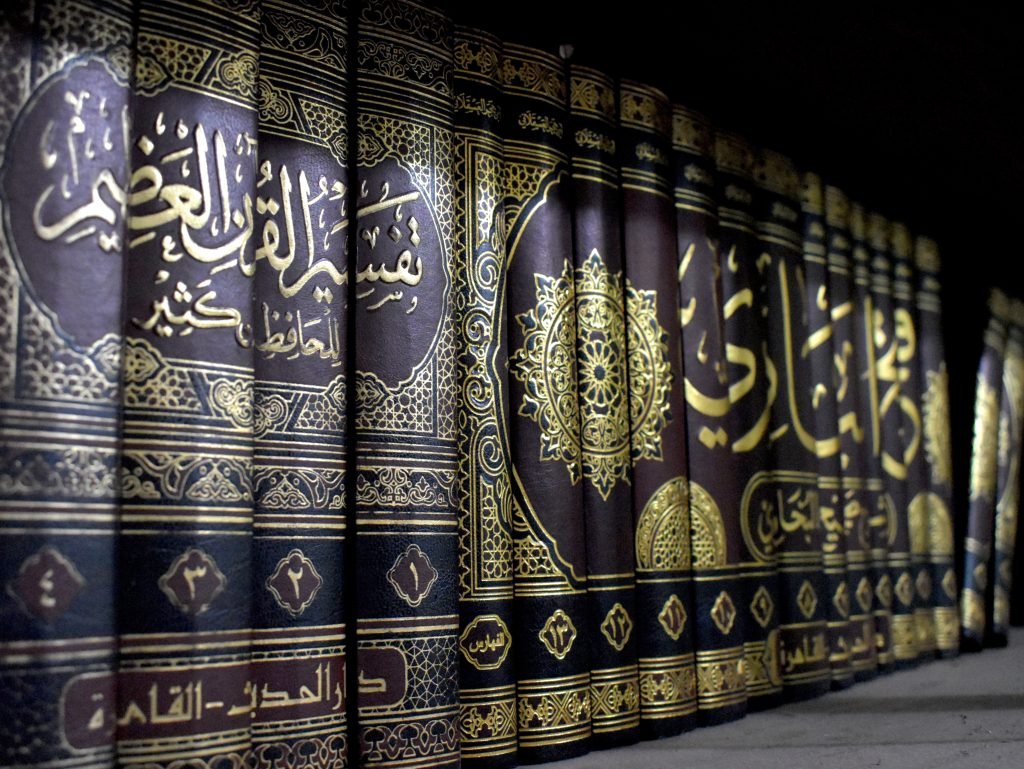
TYPES OF HADITHS
THIS POST WILL HELP MANY MUSLIMS WHO START LEARNING HADITHS FROM HADITHS BOOKS IN SHA ALLAH
1. SAHIH HADITH:-
sahih hadith means Authentic hadith. This hadith fullfil all the conditions of acceptance. In this hadith narrators in narrators chain is trustworthy, don’t have weak memory issue, narrators chain is continue and text is according to quran ( not oppose nature of islam).
Conditions for authenticity of hadith
Chain is unbroken
Every narrator is adl (person of integrity)
Every narrator is dhabit (academic soundness, proficient/accurate)
No shudhoodh (cannot contradict stronger sources for both the chain and the text)
No 3illah (Cannot contain any hidden damaging defects; refers to both the chain and the text)
2. HASAN HADITH :-
( FAIR = ACCEPTABLE)
A report that fulfils the conditions of a Saheeh hadeeth except that one of its narrators or some of them are lesser than their counterparts in a Saheeh hadeeth in terms of precision (الضبط) yet that does not remove it from being used as an evidence in terms of its authenticity.
More explanation of the terms:
So it meets the conditions of Saheeh hadeeth in terms of:
Its chain of narration (isnaad) leads back to the Prophet (salallaahu alaihi wassallam). The chain of narration is connected all the way back to the Prophet (salallaahualaihi wassallam).
The narrators are trustworthy.
It is free from contradicting any narrations stronger than it.
It is free from subtle or hidden defects.
3 :- DAEEF HADITH :-
( WEAK HADITH = NOT ACCEPTABLE)
Daeef (Weak) is a type of Hadith that has a narrator who either doesn’t have a strong memory or isn’t virtuous.
Shaikh Nasir ul-Dean Al Albani (RH) wrote a series of books called “Silsilat Al Ahadith Addaeefa” the series of weak narrations. These four volume books contain about 2,000 weak Ahadith. Every Hadith’s weakness is explained in details. When one goes through, one will be amazed and astonished to realize that how Muslims have unwittingly used so many weak narrations in the past to support an argument or a wrong practice.
4. MAWDU HADITH :-
( MAWDU = FABRICATED / HADITH NARRATED BY NARRATORS CHAIN IN WHICH LIER NARRATOR EXIST )
A Mawdu’ hadith is a fabricated one, due to its content (matn) or its chain of narration (isnad). Hadiths with no source are also dealt with here and are treated as a forgery unless a reliable source is brought up.
Sahih al-Bukhari 106
Narrated `Ali:
The Prophet (ﷺ) said, “Do not tell a lie against me for whoever tells a lie against me (intentionally) then he will surely enter the Hell-fire.”
5. SAHIH LI GHAYRIHI HADITH :-
( AUTHENTIC AND ACCEPTABLE DUE TO EXTERNAL FACTORS WHICH MEANS THIS HADITH NARRATORS CHAIN IS DAIF ( WEAK) BUT REPEATED SO MANY TIMES )
In general terms it includes those which are mutawaatir (narrated from so many by so many in each stage of transmission that it is inconceivable that they could all have agreed upon a lie), saheeh li dhaatihi (sound in and of itself), saheeh li ghayrihi (sound because of corroborating evidence) and hasan (good).
6. HASAN GHAREEB :-
( ACCEPTABLE HADITH)
Imam at-Tirmidhi said:
Qutaibah narrated to us that Jafar Ibn Sulaimaan ad-Dubaee narrated to us from Abu Imraan al-Jawnee from Abu Bakr Ibn Abee Moosaa al-Asharee who said: I heard my father whilst he was in the presence of the enemy say: Allaah’s Messenger (salallaahu alaihi wassalam) said: ((إِنَّ أَبْوَابَ الْجَنَّةِ تَحْتَ ظِلاَلِ السُّيُوفِ)) “Indeed the gates of Paradise are beneath the shade of swords.” Imam at-Tirmidhi said regarding this hadeeth: It is hasan ghareeb. It is ruled as hasan because the four narrators are reliable (thiqaat) except Jafar Ibn Sulaimaan ad-Duba`ee who is hasan in hadeeth (as cited by Ibn Hajr in Tahdheeb at-Tahdheeb 2/96), so the hadeeth drops from saheeh to hasan.
7. MURSAL HADITH :-
( VERY WEAK = NOT ACCEPTABLE / These are mostly considered weak or worse because tabi directly said that prophet Muhammad sallalho Alihe wasalam said this but its not possible to tabi to listen hadith directly from prophet Muhammad sallalaho alihe wasalam, sahabi ( companion) should be must in narrator chain in the start.)
A hadeeth is called a “mursal hadeeth” if the one who narrated it from the Prophet (blessings and peace of Allah be upon him) is a Taabi’i and not a Sahaabi. It is possible to differentiate between a Sahaabi and a Taabi’i by referring to books of biography.
Imam Abu ‘Abd-Allah al-Haakim (may Allah have mercy on him) said:
There is no difference of opinion among the shaykhs of hadeeth that the mursal hadeeth is one which the muhaddith narrated with a complete isnaad back to the Taabi’i, and the Taabi’i says, “The Messenger of Allah (blessings and peace of Allah be upon him) said.”
Ma’rifah ‘Uloom al-Hadeeth, 67
MOSTLY WE SEE HUKUM ( MUHADITHS GRADES OF HADITH) LAM TADAM DURUST TERM IT MEANS
THIS HADITH IS NOT STUDIED
SO PREVIOUS CENTURIES MUHADITHS HUKUM IS APPLICABLE ON THOSE HADITHS.
8. NASIK O MANSUK HADITH :-
Nasik o mansuk hadith means a Authentic hadiths which takes over the rule of other Authentic hadith.
For example :-
This is previous sahih hadith MANSUK HADITH :-
قَالَ ابْنُ شِهَابٍ أَخْبَرَنِي سَعِيدُ بْنُ خَالِدِ بْنِ عَمْرِو بْنِ عُثْمَانَ، وَأَنَا أُحَدِّثُهُ، هَذَا الْحَدِيثَ . أَنَّهُ سَأَلَ عُرْوَةَ بْنَ الزُّبَيْرِ عَنِ الْوُضُوءِ، مِمَّا مَسَّتِ النَّارُ فَقَالَ عُرْوَةُ سَمِعْتُ عَائِشَةَ، زَوْجَ النَّبِيِّ صلى الله عليه وسلم تَقُولُ قَالَ رَسُولُ اللَّهِ صلى الله عليه وسلم
تَوَضَّئُوا مِمَّا مَسَّتِ النَّارُ ”
Urwa reported on the authority of’A’isha, the wife of the Messenger of Allah (ﷺ), saying this:
The Messenger of Allah (ﷺ) said. Perform ablution (after eating) anything touched by fire.
Sahih Muslim 353
In-book : Book 3, Hadith 111
USC-MSA web (English) : Book 3, Hadith 688
NOW THIS AUTHENTIC HADITH RULES OVER PREVIOUS AUTHENTIC HADITH AND BECOME NASIK HADITHS :-
حَدَّثَنَا عَبْدُ اللَّهِ بْنُ مَسْلَمَةَ بْنِ قَعْنَبٍ، حَدَّثَنَا مَالِكٌ، عَنْ زَيْدِ بْنِ أَسْلَمَ، عَنْ عَطَاءِ بْنِ يَسَارٍ، عَنِ ابْنِ عَبَّاسٍ، أَنَّ رَسُولَ اللَّهِ صلى الله عليه وسلم أَكَلَ كَتِفَ شَاةٍ ثُمَّ صَلَّى وَلَمْ يَتَوَضَّأْ .
Ibn ‘Abbas reported:
The Messenger of Allah (ﷺ) took (meat of) goat’s shoulder and offered prayer and did not perform ablution.
Sahih Muslim 354 a
In-book : Book 3, Hadith 112
USC-MSA web (English) : Book 3, Hadith 689
This ruling is mansookh (abrogated). Their evidence (daleel) is:
The hadeeth of Jaabir; the last of the two commands from the Messenger of Allaah (peace and blessings of Allaah be upon him) was that there was no need to do wudoo after eating food that had been touched by fire.
(Narrated by Abu Dawood, 192; al-Nisaai, 185)
9. MARFU HADITH :-
( HADITHS FROM PROPHET MUHAMMAD SALALAHO ALIHE WASALAM)
“elevated”: A narration from the Prophet (may Allah bless him and grant him peace), e.g. a reporter (whether a Companion, Successor or other) says, “The Messenger of Allah said …” For example, the very first hadith in Sahih al-Bukhari is as follows: Al-Bukhari – Al-Humaidi Abdullah b. al-Zubair, Sufyan Yahya b. Said al-Ansari, Muhammad b. Ibrahim al-Taymi ‘Alqamah b. Waqqas al-Laithi, who said: I heard `Umar b. al-Khattab saying, while on the pulpit, “I heard Allah’s Messenger (may Allah bless him and grant him peace) saying: The reward of deeds depends on the intentions, and every person will get the reward according to what he has intended; so whoever emigrated for wordly benefits or for a woman to marry, his emigration was for what he migrated.”
10. MAUQUF HADITH:-
( Statements of sahabas RA ( companions of prophet Muhammad salalaho Alihe wasalam)
USOOL E MUHADISEEN
In this type of hadiths its rules and regulations of all Muhadiths that statements of Sahabas RA, surely from prophet Muhammad salaho Alihe wasalam, as sahabas took hadith matter very carefully and afraid to told lie in the name of prophet Muhammad salallaho alihe wasalam,
If you read statements of sahabas from hadiths books its according to the context of quran and hadiths Alhamdullilah.
“stopped”: A narration from a Companion only, i.e. his own statement; e.g. al-Bukhari reports in his Sahih, in Kitab al-Fara’id (Book of the Laws of Inheritance), that Abu Bakr, Ibn Abbas and Ibn al-Zubair said, "The grandfather is (treated like) a father." It should be noted that certain expressions used by a Companion generally render a hadith to be considered as being effectively Marfu although it is Mauquf on the face of it, e.g. the following:
“We were commanded to …”
“We were forbidden from …”
“We used to do …”
“We used to say/do … while the Messenger of Allah was amongst us.”
“We did not use to mind such-and-such…”
“It used to be said …”
“It is from the Sunnah to …”
“It was revealed in the following circumstances: …”, speaking about a verse of the Qur’an.
11. MAQTU HADITHS :-
“severed”: A narration from a Successor, e.g. Muslim reports in the Introduction to his Sahih that Ibn Sirin (d. 110) said, “This knowledge (i.e. Hadith) is the Religion, so be careful from whom you take your religion.”
The authenticity of each of the above three types of hadith depends on other factors such as the reliability of its reporters, the nature of the linkage amongst them, etc. However, the above classification is extremely useful, since through it the sayings of the Prophet (may Allah bless him and grant him peace) can be distinguished at once from those of Companions or Successors; this is especially helpful in debate about matters of Fiqh.
12. MUTAWAATIR HADITH :-
if the hadeeth was narrated via many isnaads and narrations.
13. AHAAD ( GHAREEB) HADITH :-
if the hadeeth was narrated via only one isnaad and one narration; this was also called al-ghareeb al-mutlaq or al-fard al-mutlaq. But if the hadeeth was narrated by one Taabi‘i from one Sahaabi, then two or more narrators transmitted it from the Taabi‘i, this is called gharaabah nisbiyyah, i.e., it is ghareeb or aahaad with regard to the narration of that Taabi‘i from the Sahaabi.
14. MAQBOOL HADITH :-
( Accepted)
if the hadeeth fulfilled the conditions of acceptability and was fit to be quoted as evidence and acted upon.
15. MARDOOD HADITH :-
( REJECTED)
if it did not fulfill the conditions of acceptability.
16. MUTAFAAQUN ALAYHI HADITHS :-
( SAME HADITHS FOUND IN BUKHARI AND MUSLIM)
When the Hadith Masters use this term, it means that the Hadith in question is found in both books; Sahih Bukhari & Sahih Muslim, on the authority of the same Sahabi (radiyallahu’anhu) even if there exists variation in the wording.
(An-Nukat ‘ala ibnis Salah, of Ibn hajar, vol.1 pg.364 & Fathul Mughith, vol.1 pg.75)
Note: This is the general usage for the term.
Some Muhaddithun use the term muttafaqun ‘alayh to refer to a Hadith that is found in the 2 books mentioned above as well as Musnad Ahmad. The Muhaddith generally specifies this in the introduction as is the case in the celebrated book: Muntaqal Akhbar.
(See Naylul Awtar, vol.1 pg.25)
AMAZING FACTS ABOUT BUKHARI AND MUSLIM
There are approx half of sahih bukhari and Sahih Muslim is same according to text but Imam Muslim didn’t copy any single hadith from sahih bukhari, imam muslim collects hadiths from different narrators chains, A big story behind that reason those who are interested to know ask me any time that story, Imam Muslim was most loyal and trust worthy student of Imam bukhari,. Even cutoff with his other teacher Imam Zohri.
WILL CONTINUE IN SHA ALLAH
 MISHKAT INTERNATIONAL DAWAH ORGANISATION